
Bondi Beach Tragedy Exposes Flaws in Gun Laws
The Bondi Beach tragedy reveals critical issues in Australia's so-called 'gold standard' gun laws. As calls for tougher national reforms grow, questions arise about limiting gun ownership and ensuring public safety in the wake of the nation’s worst mass shooting in decades.
NEWS
digifusion
12/15/20258 min read

Introduction to the Bondi Beach Shooting
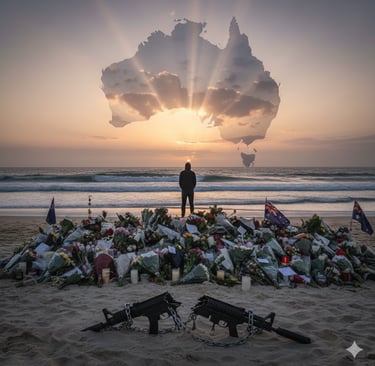
The Bondi Beach shooting incident, which tragically resulted in the loss of 15 lives, marks a dark chapter in Australia’s ongoing struggle with gun violence. On a seemingly routine day at one of the country’s most renowned beaches, chaos erupted when a hail of gunfire shattered the tranquility of this popular destination. The horrifying event not only captured the attention of the local community but also reverberated throughout the nation, prompting discussions about public safety and the need for stringent gun regulations.
Leading up to the shooting, it has been reported that tensions in the area had been escalating, with increased instances of public confrontation and unrest. Despite the serene beachside environment, Bondi has faced challenges related to social issues, including drug use and gang activity. Witnesses described the attack as sudden and shocking, with many struggling to comprehend the precision and intention behind the gunman’s actions. Onlookers and bystanders scrambled for safety amidst the panic, some attempting to assist the injured while others sought refuge from the unfolding violence.
The aftermath of the Bondi Beach shooting brought an overwhelming sense of grief and disbelief to the local populace and the nation at large. Significant media coverage highlighted the overwhelming trauma faced by survivors and the families of the victims, emphasizing the urgent need for collective reflection on Australia’s gun laws. The event ignited a passionate discussion among policymakers, advocacy groups, and citizens concerning the effectiveness of current regulations. There is a growing consensus that this tragedy should propel critical reforms aimed at preventing similar occurrences in the future, underscoring the need for a reassessment of existing legislation surrounding firearm access and regulation.
Historical Context of Gun Laws in Australia
The evolution of gun laws in Australia is primarily shaped by a series of incidents that highlighted the urgent need for reform in the country’s approach to firearms regulation. A crucial turning point occurred in April 1996, when the Port Arthur massacre took place in Tasmania, resulting in the tragic deaths of 35 individuals. This devastating event galvanized public opinion and pushed the Australian government to enact some of the most stringent gun laws in the world.
In response to the massacre, the Australian government implemented a sweeping gun buyback program, which effectively removed over 650,000 firearms from circulation. The National Firearms Agreement (NFA) was established, leading to stricter regulations concerning the ownership and use of guns. Under the NFA, requirements included licensing, registration, and the prohibition of certain firearm types, such as semi-automatic rifles and shotguns. These measures significantly altered the landscape of gun ownership in Australia, prioritizing public safety over individual ownership rights.
Following the introduction of these rules, Australia witnessed a marked decline in gun-related homicides and mass shootings. The country had seen no mass shootings since 1996, a notable statistic that underscores the effectiveness of the stricter gun laws. Additionally, research indicates a correlation between the enforcement of these regulations and the decrease in gun violence, contributing to ongoing discussions on the importance of comprehensive gun control.
Over the years, Australia has faced various challenges regarding gun laws, including debates around hunting and sport shooting. However, the prevailing sentiment remains that safety must be paramount. As events such as the Bondi Beach tragedy reignite concerns over gun violence, the historical context of Australia’s gun laws continues to play a crucial role in shaping the ongoing discourse on firearms regulation in the nation.
Public Reaction and Outcry
The tragic shooting incident at Bondi Beach has reverberated throughout Australia, igniting intense emotions and prompting widespread public reactions. Social media has emerged as a crucial platform for individuals to express their shock, grief, and anger. Hashtags denouncing gun violence and advocating for stricter regulations have dominated discussions, with thousands sharing their stories and sentiments. The immediacy of social media allows the voices of victims' families and survivors to be amplified, showcasing their pain and underscoring the urgent need for legislative change.
In light of the tragedy, community organizations have mobilized to organize protests and demonstrations. These gatherings serve as a means for the public to come together, honoring those lost while demanding meaningful reforms in gun laws. The images of united groups holding banners with powerful messages reflect a growing consensus among citizens: action must be taken to prevent future tragedies. The call for stricter gun control measures has become a rallying cry, resonating across diverse demographics, highlighting a collective yearning for safety and accountability.
Moreover, various stakeholders, including advocacy groups and public figures, have publicly voiced their support for reform. Some have called attention to the inadequacies of current laws, emphasizing that the existing regulations do not sufficiently address the increasing instances of gun violence. The prevailing sentiment drives home the reality that complacency is no longer an option. In the wake of the Bondi Beach incident, there is a resounding demand for lawmakers to prioritize discussions on gun control in order to protect the community at large.
The emotional toll taken on survivors and families cannot be overstated. Their stories are interspersed with heartfelt appeals for change, invoking a sense of urgency that echoes throughout the nation. As the public continues to rally for reform, it becomes increasingly evident that a shift in Australia's gun legislation is not only desired but, in the eyes of many, necessary to safeguard the public's well-being.
Political Responses and Proposals
The tragic events at Bondi Beach have ignited a fervent dialogue among government officials and political leaders in Australia regarding the necessity for stricter gun laws. Following the incident, political figures from various parties have voiced their concerns, advocating for reform in the nation's gun control policies. This response comes amidst a backdrop of Australia’s historical context of gun violence and the effective measures implemented after the Port Arthur massacre in 1996, which prioritized public safety through stringent regulations.
In the wake of the tragedy, the Prime Minister and the Minister for Home Affairs have expressed their solidarity with the victims' families while outlining a commitment to reevaluate existing firearm regulations. Proposals from the government include revising the licensing requirements for gun ownership, enhancing background checks, and potentially banning certain types of firearms deemed high-risk. Such measures have garnered varying levels of support and scrutiny across the political spectrum, emphasizing the complexity of gun control debates in Australia.
While the ruling party positions itself in favor of tightening regulations, opposition parties have also contributed to the discourse. Some members of the opposition have called for an outright ban on semi-automatic weapons, arguing that reducing access to firearms is essential for public safety. Conversely, representatives from regional areas have cautioned against overly restrictive measures that may infringe upon the rights of lawful gun owners, particularly for those engaged in agriculture and hunting.
However, the path towards legislative reform is fraught with challenges. Political polarization on issues of gun control remains significant, with various factions putting forward divergent views. To achieve effective changes, there will need to be a concerted effort from all political parties to address these concerns and foster collaborative solutions aimed at enhancing community safety without imposing undue burdens on responsible gun owners.
Comparison with Global Gun Control Measures
In examining Australia's gun laws, it is essential to contextualize them within the framework of global gun control measures, particularly in relation to countries that experience varying levels of gun violence. The effectiveness of a nation's gun legislation can often be observed in the rates of firearm-related incidents, which frequently serve as indicators of public safety. Countries such as the United States, which maintains a higher incidence of gun violence, have more lenient gun laws that allow for broad access to firearms. Conversely, nations such as Japan and the United Kingdom, known for their stringent controls, report significantly lower levels of gun-related crimes.
Australia's response to gun violence has typically been characterized by a stringent regulatory approach, primarily illustrated by the National Firearms Agreement (NFA) established post-1996. Following the Port Arthur massacre, the NFA implemented restrictions that fundamentally altered the landscape of gun ownership in Australia. This included measures such as mandatory licensing, registration of firearms, and comprehensive background checks, elements not as rigorously enforced in countries with higher gun violence rates. For instance, in Canada, while there are restrictions similar to Australia’s, there are still notably higher rates of firearm-related incidents compared to those observed in Australia.
Internationally, studies highlight a correlation between stricter gun laws and lower gun violence rates. Countries like Germany and South Africa illustrate this trend; Germany employs a robust licensing system and strict controls over ammunition sales, whereas South Africa, despite implementing gun control measures, continues to grapple with high levels of gun violence due in part to socio-political factors and enforcement challenges. Ultimately, this comparative analysis underscores the necessity of examining diverse global strategies in relation to firearm regulation, as Australia seeks to refine its approach in light of the recent tragedy at Bondi Beach.
Impacts of Stricter Gun Laws on Australian Society
The recent tragedy at Bondi Beach has reignited the conversation surrounding gun laws in Australia. Advocates for stricter regulations argue that implementing tougher gun laws could substantially decrease gun violence, leading to enhanced public safety. Historically, evidence supports the view that stricter gun measures correlate with lower instances of firearm-related incidents. For instance, following the introduction of the National Firearms Agreement in 1996, Australia witnessed a significant decline in mass shootings, highlighting the positive implications of stringent regulations.
By prioritizing safety, stricter gun laws may help deter criminal activities involving firearms. The potential reduction in access to guns could mean fewer violent confrontations and greater stability within communities. Moreover, improved gun control policies could focus on mental health assessments, ensuring that firearms do not fall into the hands of individuals who pose a threat to themselves or others. This proactive approach represents a stronger commitment to safeguarding public welfare.
However, the advocacy for stricter gun laws is not without its critics. Concerns arise about the implications on personal freedoms and the rights of responsible gun owners. Many Australians partake in shooting sports and hunting, which could be affected by an overhaul of current regulations. The challenge lies in balancing the need for safety with the rights of citizens who engage in these activities responsibly and legally. Furthermore, there exists a fear that stricter laws may not effectively prevent criminals from obtaining firearms, therefore questioning the overall efficacy of such measures.
Debate continues within the Australian society as citizens grapple with the outcomes of potential reforms. The emphasis must remain on a thoughtful dialogue that acknowledges both the benefits and the concerns regarding gun ownership and safety. These discussions will be crucial in navigating the path forward concerning Australia’s gun laws.
Conclusion and Call to Action
The recent tragedy at Bondi Beach has starkly illustrated the pressing need for reform in Australia’s gun laws. This incident serves as a heart-wrenching reminder of the impact that gun violence can have on communities and families, amplifying the urgent calls for legislative change. As we have discussed, the current laws surrounding firearm ownership and usage have been deemed inadequate in preventing such tragedies. The case serves as a catalyst for both public discourse and policy review, highlighting the necessity for a more comprehensive approach to gun control.
Australia's history of gun reforms demonstrates a commitment to prioritizing public safety. The implementation of stricter regulations in the past resulted in a significant decline in gun-related violence, indicating that thoughtful legislation can indeed create safer environments. However, the ongoing occurrences of gun violence suggest that further examination and revision of existing laws are required to address emerging challenges. As citizens, it is paramount that we engage in conversations regarding gun safety and advocate for legislative measures that can prevent future tragedies.
Engagement in community discussions, supporting advocacy groups, and participating in local initiatives aimed at reforming gun laws can all contribute to a safer society. It is essential for residents to voice their concerns and collaborate with lawmakers to ensure that their perspectives are taken into account. The Bondi Beach tragedy is not just a call for mourning but a rallying point for action. By coming together as a community, we can work towards comprehensive solutions that prioritize the safety and well-being of all Australians. Together, we can push for a more accountable and effective gun control regime that reflects the values of our society.