
Canada’s PM Hails Strategic Partnership with China to Adapt to New Global Realities
Prime Minister Mark Carney hails a new Canada-China strategic partnership in Beijing, pivoting to 'new global realities' with major trade deals on EVs, canola, and energy. Read the latest on this historic diplomatic reset.
NEWSPOLITICS
digifusion
1/19/20264 min read
Introduction to the Strategic Partnership
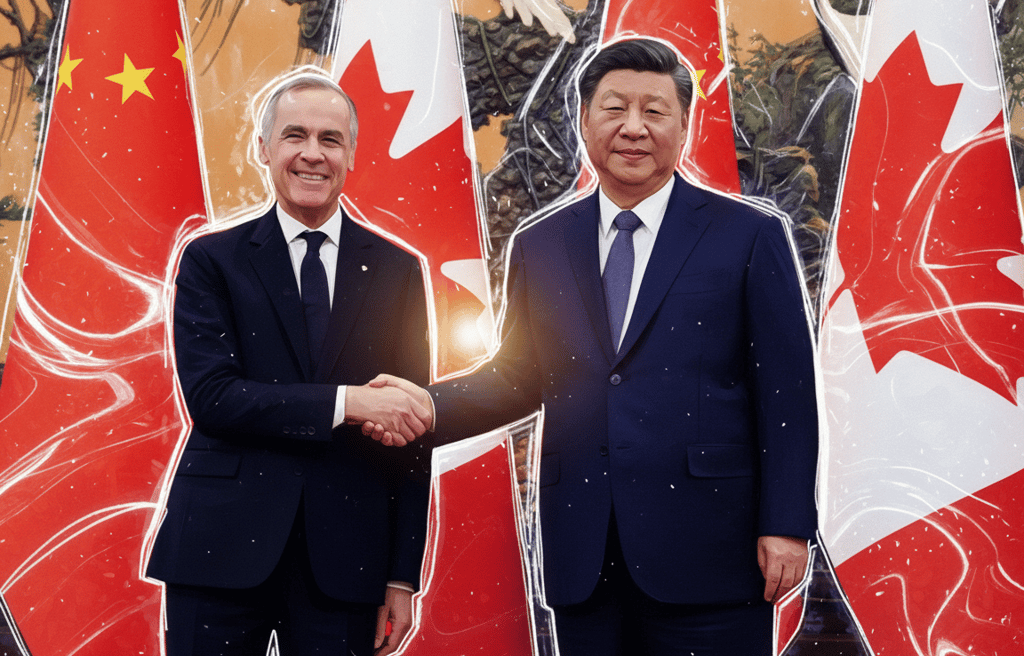
In a significant development, Canada’s Prime Minister has recently articulated the importance of a strategic partnership with China, highlighting its necessity in adapting to evolving global dynamics. This announcement marks a pivotal moment in Canada-China relations, which have been historically marked by both collaboration and contention.
The timeline of Canada-China relations stretches back several decades, with Canada being one of the first Western nations to recognize the People's Republic of China in 1970. Over the years, the bilateral relationship has evolved, encompassing trade, investment, education, and environmental cooperation. However, geopolitical tensions, particularly concerning human rights issues and trade policies, have sometimes hindered the partnership’s potential. The recent commitment to foster a strategic partnership signals a renewed focus on collaboration, aiming to transcend past challenges.
The rationale behind this new partnership is multifaceted. Canada seeks to secure its position in the global economy by leveraging China’s growing market and its technological advancements. In return, China looks to enhance its ties with Canada to strengthen its presence in North America. This partnership is not merely transactional; it encompasses a broad spectrum of areas such as climate change, public health, and innovation. Both nations recognize the need for cooperative strategies to address global crises that require united action.
Furthermore, the strategic partnership represents a proactive approach to navigating an increasingly complex international landscape, characterized by rapid economic shifts and social transformations. By establishing a framework for dialogue and collaboration, Canada and China aim to foster mutual understanding and respect, paving the way for sustainable growth and development for both countries.
The evolving global landscape presents a series of challenges that are compelling Canada to reassess its longstanding relationship with China. Economic pressures are at the forefront of this reassessment. The increasing volatility in global markets and shifts in supply chains have made it vital for Canada to secure trade partnerships that bolster economic resilience. China, as a significant player in global trade, remains an essential partner for Canada; however, the economic competition among nations necessitates a strategic approach to ensure mutual benefit.
Geopolitical dynamics also play a critical role in shaping Canada-China relations. The rise of China as a global superpower has resulted in shifting alliances and a redefinition of power structures. Canada, traditionally aligned with Western nations, must navigate these complexities while fostering constructive dialogue with China. The strategic partnership is increasingly viewed as a means to enhance security, facilitate diplomatic engagement, and promote stability in a multipolar world.
Furthermore, environmental challenges are equally important in this discourse. Both Canada and China face pressing climate issues that require collaborative solutions. Canada, with its abundant natural resources, and China, with its manufacturing prowess, can benefit from a partnership that emphasizes sustainability and climate action. Engaging in joint environmental initiatives not only strengthens bilateral ties but also demonstrates a commitment to addressing global challenges collaboratively. The recognition that climate change knows no borders reinforces the necessity for a unified approach.
In light of these global realities - economic pressures, shifting geopolitical dynamics, and shared environmental challenges - a revamped Canada-China partnership appears essential. This reassessment aims to foster a relationship grounded in mutual respect, shared interests, and long-term cooperation that can adapt to the complexities of today's interconnected world.
Benefits of the Partnership for Both Nations
The strategic partnership between Canada and China presents numerous benefits that can significantly enhance the socio-economic fabric of both nations. From an economic perspective, the partnership is poised to unlock substantial trade opportunities. China, with its rapidly growing economy and substantial consumer market, offers a plethora of options for Canadian businesses to expand their reach. This can result in increased exports of Canadian goods such as agricultural products, natural resources, and manufactured goods, which can bolster Canada's economy. Similarly, Canadian companies can benefit from investment opportunities in China's diverse sectors including technology, infrastructure, and renewable energy.
Furthermore, collaboration in technology and innovation stands to benefit both nations immensely. Canada is known for its advancements in research and development, while China is making significant strides in high-tech industries. By working together, both countries can share insights and resources that lead to innovations in sectors such as artificial intelligence, biotechnology, and clean technology. This symbiotic relationship fosters an environment of knowledge exchange that can accelerate technological advancements and create a competitive edge in the global marketplace.
Climate change is another critical area where collaboration can yield mutual benefits. Both Canada and China recognize the urgency of addressing climate issues, and through joint initiatives, they can work on achieving their respective climate goals. Initiatives such as sharing best practices in renewable energy, sustainable urban development, and climate resilience can help both nations reduce their carbon footprints. This partnership not only serves immediate economic interests but also contributes to global efforts in combating climate change.
In conclusion, the strategic partnership between Canada and China is set to bring economic benefits, technological advancements, and collaborative efforts toward climate goals. Such a comprehensive approach not only serves the interests of both nations but also positions them as responsible global players addressing contemporary challenges.
Challenges and Future Directions
The strategic partnership between Canada and China presents a range of challenges that must be acknowledged and addressed. One primary obstacle is the potential for political disagreements, especially regarding human rights issues and governance practices. Historical conflicts have generated skepticism among both Canadian and Chinese populations about the commitment to mutual respect in international norms. If not managed carefully, these political tensions could hinder the partnership's progression, complicating trade negotiations and collaboration initiatives.
Another significant challenge is the presence of trade barriers, including tariffs and non-tariff measures that could impede the flow of goods and services between the two nations. While Canada has a robust trade relationship with China, fluctuating trade policies and economic fluctuations can lead to uncertainty. This volatility necessitates careful monitoring and strategic alignment to ensure mutual benefit without compromising national interests.
Additionally, public perception in both Canada and China poses a challenge. In Canada, there is an increasing concern over foreign influence and the implications of a deepened partnership with a country often viewed with skepticism. Likewise, in China, there may be hesitations regarding Canada’s commitment to upholding the partnership amidst fluctuating diplomatic relations, as seen in various disputes. Addressing these perceptions through transparent communication and public diplomacy will be crucial.
Looking ahead, potential future directions for Canada-China relations could focus on enhancing diplomacy efforts aimed at building trust and managing disagreements. Collaborative initiatives such as joint research projects, cultural exchanges, and environmental sustainability programs can also provide avenues for cooperation, benefiting both nations. By proactively engaging in dialogue and fostering mutual understanding, Canada and China can navigate these challenges and cultivate a stable, productive partnership that adapts to the evolving global landscape.