
China Rejects Nvidia H200 AI Chips Amid Export Rule Changes
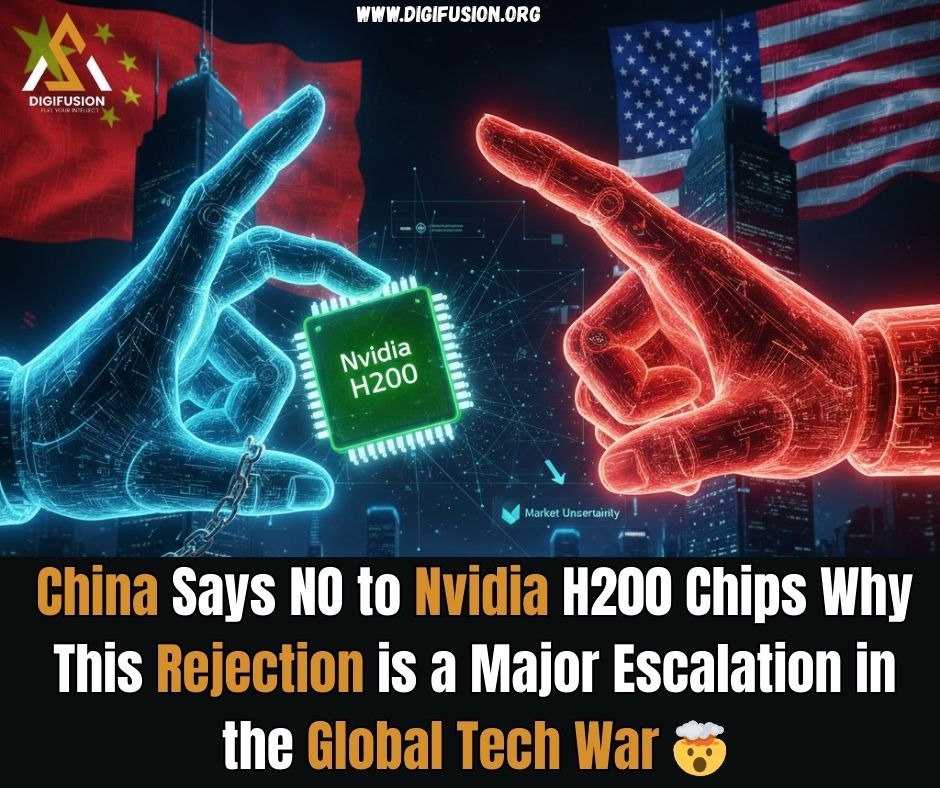
China's rejection of Nvidia's latest H200 AI chips, even after the US softened export regulations, underscores its strategic push for domestic AI chip independence in the face of growing technological competition.
NEWSAI UPDATESGAMING NEWS
digifusion
12/11/20255 min read
Overview of the H200 AI Chips and Export Rules
Nvidia's H200 AI chips represent a significant advancement in artificial intelligence technology, particularly tailored for large-scale machine learning and data processing tasks. Built on cutting-edge architecture, these chips are designed to enhance computational efficiency, delivering impressive performance metrics that enable rapid training of complex AI models. With features such as enhanced parallel processing capabilities and increased memory bandwidth, the H200 series is poised to address the burgeoning demands of industries relying on AI, including healthcare, finance, and telecommunications.
The extensive applications of the H200 AI chips make them a critical asset in the global AI landscape. Organizations utilizing these chips can leverage their capabilities to develop more sophisticated AI solutions, driving innovation and productivity within their sectors. However, the introduction of additional U.S. export rules has led to heightened scrutiny over the international trade of such advanced semiconductor technologies, particularly regarding China, a major player in the AI domain.
Recent changes in the export regulations governing AI technologies are designed to protect U.S. national security interests while fostering continued technological leadership. These adjustments included a more nuanced approach towards the licensing of certain high-performance computing chips, enabling more flexibility in exports to allied nations. However, the revised rules still maintain stringent controls aimed at curtailing access to advanced technologies by countries considered potential adversaries.
Despite the relaxation of specific export rules, China's decision to refuse Nvidia's H200 AI chips illustrates a deliberate move towards achieving technological self-sufficiency. The country's ongoing commitment to developing its domestic semiconductor industry reflects broader strategic goals, reinforcing the notion that China aims to minimize reliance on foreign technology amid intensifying geopolitical tensions. Understanding these developments is key to comprehending the implications of this technology rejection and its impact on the global AI market.
China's Domestic AI Chip Development Initiatives
As global competition intensifies in the artificial intelligence (AI) arena, China is actively pursuing initiatives aimed at establishing its independence in AI chip manufacturing. The Chinese government has outlined strategic plans that emphasize the importance of self-sufficiency in semiconductor technology, especially as international tensions surrounding technology transfer and trade policies become more pronounced. By 2025, China aims to significantly reduce its dependence on foreign technology and bolster its domestic capabilities in producing advanced AI chips.
Several key players in the Chinese tech landscape are spearheading these efforts. Companies like Huawei, Alibaba, and Baidu have made substantial investments in AI chip research and production. Huawei’s Ascend chips, for instance, are designed specifically for AI tasks and are a testament to the company’s commitment to developing homegrown alternatives to foreign products like Nvidia’s offerings. Baidu, on the other hand, has introduced its Kunlun chips, which are engineered to handle heavy AI computations that are essential for tasks such as image recognition and natural language processing.
Despite these ambitious initiatives, domestic chip manufacturers face considerable challenges as they strive to compete with established global giants like Nvidia. The primary hurdle lies in the lack of advanced fabrication technologies, which impacts the quality and performance of their chips. Furthermore, China's semiconductor industry is still relatively nascent, often struggling with supply chain complexities and the need for skilled labor. In addition, international sanctions and export controls imposed by other countries may hinder China's progress in acquiring the essential technologies required to enhance its domestic production capabilities.
Ultimately, China's push for AI chip independence reflects its broader ambitions to lead in the global technology landscape, reducing reliance on foreign entities while also aiming to achieve technological self-sufficiency. This evolution not only affects China's own technological development but is poised to reshape the global semiconductor industry landscape as competition heats up between domestic and international players.
Reasons Behind China's Rejection of Nvidia's Chips
China's decision to reject Nvidia's H200 AI chips can be analyzed through various strategic and political lenses, reflecting broader national goals and geopolitical dynamics. One of the foremost concerns is national security, as the country grapples with the implications of foreign technology that could potentially be weaponized or used for surveillance. The Chinese government perceives reliance on Western technological products, such as Nvidia’s, as a risk to its security landscape. This apprehension has been amplified by ongoing tensions between China and the United States, which have led to a crackdown on technology transfers that could compromise national interests.
In tandem with security concerns, China's ambition for technological sovereignty plays a critical role in its rejection of Nvidia's products. The country aims to establish a self-sufficient, indigenous tech ecosystem that reduces dependence on foreign technology, particularly in the AI sector. By fostering domestic innovation, China seeks not only to mitigate vulnerabilities associated with external suppliers but also to position itself as a global leader in technology. This strategic pivot is evident in recent policies aimed at supporting local companies through subsidies and research grants, propelling advancements that align with national objectives.
Furthermore, the geopolitical landscape significantly influences these decisions. The ongoing competition between global powers necessitates that countries like China prioritize their technological advancement and autonomy. Industry experts note that this rejection is not merely about Nvidia’s specific products but rather a broader message aimed at establishing an independent technological frontier. Simultaneously, this move could stimulate domestic firms to innovate and compete internationally, thereby enhancing overall economic resilience. As the conflict between the US and China persists, these underlying motivations will likely continue to shape China’s technological strategies and decisions.
Future Implications for the AI Chip Market
The decision by China to refuse Nvidia's H200 AI chips signifies a pivotal moment in the AI chip market, with ramifications that could extend far beyond its borders. As China intensifies its focus on developing domestic semiconductor capabilities, this move could catalyze a significant shift in the global supply chain dynamics and market structure. The emphasis on self-reliance may lead to an expansion of local semiconductor production, prompting other nations to rethink their procurement strategies and investments in technology.
One consequence of China's refusal of foreign chips is the potential reduction in dependence on external suppliers, primarily the United States. By fostering home-grown alternatives, China aims not only to secure its technological autonomy but also to diminish the leverage held by companies like Nvidia. This strategic shift could inspire similar strategies among other countries, particularly those witnessing geopolitical tensions, pushing them towards cultivating their domestic production of critical technologies.
In addition to reshaping supply chains, the growing competence in China's semiconductor industry may introduce new competitive dynamics. As domestic AI chip manufacturers emerge, competition could intensify within the market, affecting pricing and technological advancements. The advancement of these capabilities might also result in increased collaboration between nations, as the need for diverse and innovative solutions becomes paramount. Global partnerships could flourish as countries engage in technology-sharing agreements to simultaneously boost innovation while reducing vulnerabilities tied to single-source dependencies.
Ultimately, China's strategic refusal of Nvidia's chips presents a turning point that could influence the entire semiconductor landscape. By prioritizing domestic production, China may set a precedent that impacts how nations approach technological reliance, competition, and collaboration in the AI sector and beyond. The ongoing developments in this arena will be critical to watch as various nations navigate the complex interplay of technology, geopolitics, and economic interests.