Top 5 Best AI Tools for Flawless Content Writing
Stop wasting time on writing! Discover the 5 absolute best AI tools for flawless content creation, ranked by performance. Find your perfect AI assistant for efficient content writing today.
AI UPDATESNEWS
digifusion
12/8/20255 min read

Introduction to AI Writing Tools
AI writing tools represent a significant advancement in the content creation landscape, leveraging generative AI technologies to assist writers, marketers, and businesses in refining their output. These tools utilize complex algorithms and natural language processing (NLP) to analyze vast datasets, enabling them to generate coherent text that mimics human writing styles. The evolution of artificial intelligence in writing can be traced back to simple grammar checkers and spell-check applications, which have now transformed into sophisticated platforms that can generate articles, blog posts, and social media content with minimal human intervention.
The potential benefits of AI writing tools are numerous. For writers, these applications can serve as valuable assistants, offering suggestions for structure, tone, and style, thereby enhancing creativity and productivity. Marketers can leverage these tools to produce compelling copy for advertisements or promotional materials, ensuring consistency and adherence to brand guidelines. Businesses, on the other hand, benefit from the efficiency of generating large volumes of content quickly, allowing them to stay relevant in an increasingly competitive digital landscape.
As the capabilities of AI writing tools continue to grow, they provide users with the ability to customize outputs to match specific needs and preferences. This personalization is particularly beneficial for diverse businesses seeking to engage different demographics or adapt their messaging across various platforms. The integration of AI in content creation has not only made writing more accessible but has also opened new avenues for innovation in storytelling and communication.
In our examination of the top AI writing tools, we will delve deeper into their features, compare their advantages, and discuss how they can be effectively utilized to revolutionize content creation.
Criteria for Selecting the Best AI Writing Tools
When evaluating the best AI writing tools available in the market today, several critical criteria come into play. These factors are essential for determining the overall effectiveness, user-friendliness, and value that each tool offers to its users. Understanding these criteria helps in making informed decisions when selecting an AI writing tool suited for specific needs.
First and foremost is ease of use. A tool that is intuitive and simple to navigate attracts users looking for efficiency. User interface design, the learning curve associated with the tool, and customer support all contribute to how easily one can get started with writing and generating content. A user-friendly platform can significantly enhance productivity, making it a top priority for evaluation.
Next, versatility in various writing formats is crucial. The best AI writing tools should accommodate diverse content types, including blog posts, articles, social media posts, and marketing copy. This adaptability ensures that users can rely on the tool for different writing tasks, adding to the overall value it provides.
Integration with existing workflows is another vital criterion. A writing tool that seamlessly connects with other applications and platforms, such as project management software, grammar checkers, or content management systems, enhances productivity by reducing friction in the content creation process. Such interoperability is often a decisive factor in selecting the right tool.
The quality of generated content plays a significant role in how well an AI writing tool meets its intended purpose. Evaluating the coherence, relevance, and originality of the content produced can reveal a tool's effectiveness in mimicking human-like writing. Finally, assessing pricing models is essential; the best tools offer various pricing tiers to cater to different budgets, ensuring accessibility for freelancers, small businesses, and enterprises alike.
In conclusion, candidates for the top AI writing tools are rigorously evaluated based on these criteria, which together paint a comprehensive picture of what makes an AI writing tool exceptional in today’s content-driven landscape.
Top 5 AI Writing Tools You Should Know About
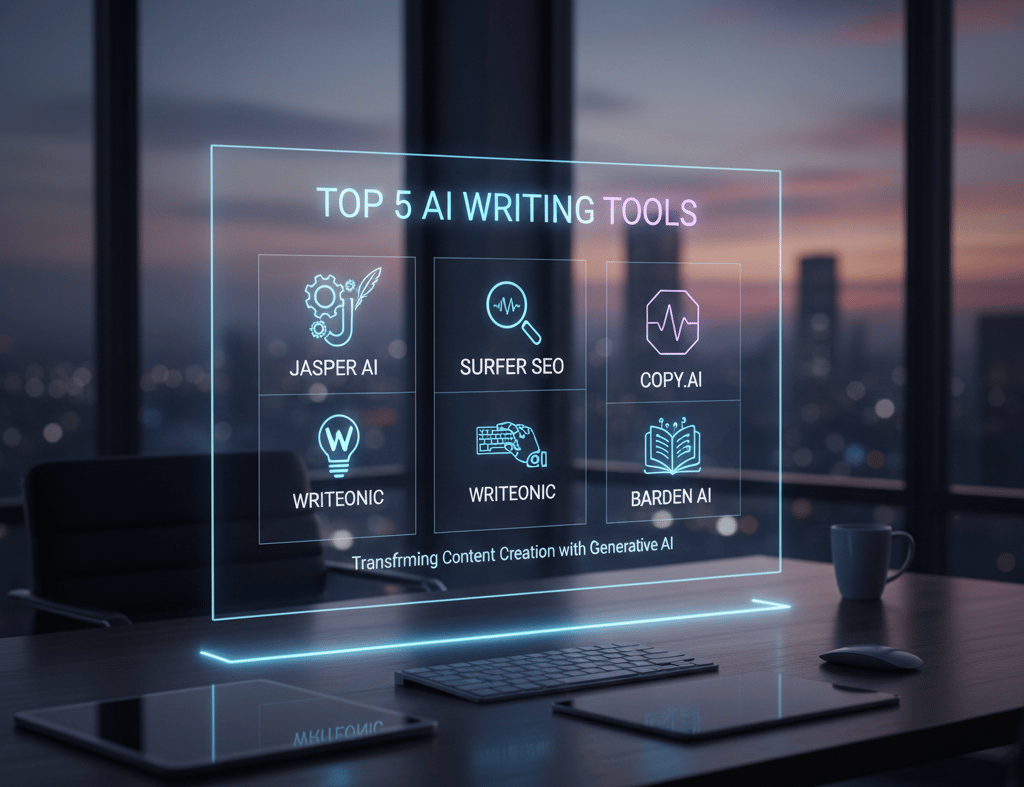
Artificial intelligence has made significant strides in recent years, particularly in the realm of content creation. The following five AI writing tools exemplify the advancements in generative AI, each offering unique features that cater to diverse writing needs.
Firstly, OpenAI's ChatGPT stands as a frontrunner among AI writing tools. Renowned for its conversational capabilities, ChatGPT can generate coherent and contextually relevant text. It excels in crafting blog posts, marketing copy, and even personalized email responses. Users benefit from its ability to adapt to various tones and styles, making it suitable for both casual and professional writing.
Next, we have Grammarly, which is primarily recognized for its proofreading abilities. However, its AI-driven writing assistant feature enhances content by suggesting improvements in clarity, engagement, and delivery. Grammarly is particularly advantageous for students and professionals alike, ensuring that documents maintain a high standard of writing quality.
The third tool is Jasper, which is tailored for marketers and content creators. Its strengths lie in generating SEO-optimized articles, social media posts, and product descriptions. With its intuitive interface, Jasper streamlines the writing process by providing templates aligned with specific content types. This tool is especially effective in enhancing online presence through tailored content strategies.
Copy.ai is another noteworthy contender, specializing in generating high-quality marketing content. Users can create compelling sales emails and social media ads quickly and efficiently. Its range of templates and AI-driven suggestions make it an ideal choice for businesses looking to bolster their marketing efforts through engaging copy.
Lastly, Writesonic offers versatility across various content forms, including blog articles, landing pages, and product descriptions. Its user-friendly platform allows for easy integration of keywords, enhancing content discoverability. Writesonic is particularly beneficial for entrepreneurs and small businesses looking for efficient content generation at scale.
These five tools represent the forefront of generative AI in writing, each serving distinct purposes and providing tangible benefits to users in various sectors.
Conclusion: The Future of AI in Writing
As we have explored throughout this post, the rise of AI writing tools presents significant opportunities for revolutionizing the landscape of content creation. From enhancing productivity to providing creative support, these generative AI systems are equipped with capabilities that allow users to produce high-quality content in less time. The five tools highlighted in our discussion exemplify the versatility and innovation that AI can bring to writing tasks, serving as practical solutions for writers at all levels.
However, it is vital to acknowledge the broader implications of integrating artificial intelligence into the writing process. While these tools can augment human creativity, they also raise essential ethical considerations, such as concerns over originality, authenticity, and the potential for misinformation. The reliance on AI-generated text may inadvertently lead to a decline in critical thinking and writing skills if individuals become overly dependent on these technologies. Hence, it is crucial for users to approach AI writing tools with caution and mindfulness, ensuring that they enhance rather than replace their personal input.
Looking ahead, the future of AI in writing will likely involve a blend of human insight and machine efficiency. As technology evolves, writers can expect increasingly sophisticated tools that can understand context, tone, and intent more accurately. This progression could pave the way for personalized writing experiences, enabling writers to harness AI as a collaborative partner rather than a mere assistant.
In conclusion, the integration of AI in the writing process holds transformative potential, but it necessitates a balanced approach. Writers are encouraged to explore these generative AI tools while remaining vigilant about maintaining their unique voice and creativity. By doing so, they can leverage the benefits of AI, thereby enriching their writing endeavors and contributing to the dynamic nature of content creation in the digital age.